

Inspiring Curiosity. Building Skills. Shaping Idaho’s Future.
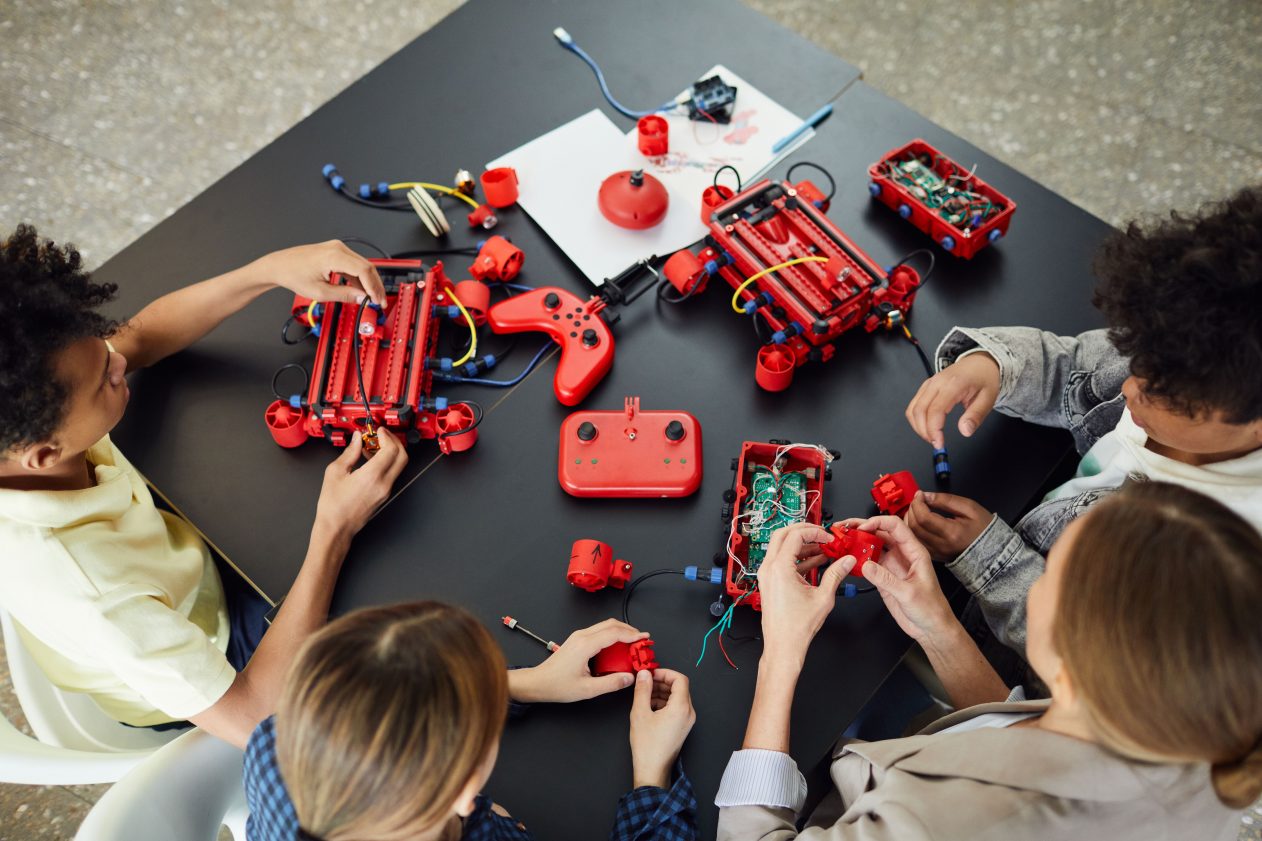
WDC Lending Libraries provide educators and communities with STEM kits and resources to engage students in hands-on career-connected learning.
How it Works
- Browse: Explore available career-connected kits. Note your preferred kit name or number and lending library location.
- Request a Kit: Complete the checkout form with your preferred location, kit number, and quantity. The Lending Library Manager will respond within 5 business days with availability and pickup instructions.
- Use and Return: Explore hands-on activities and real-world career connections. Return your kit within 4 weeks and complete the borrower feedback form.
- Spread the Word: Share these career-connected kits with fellow educators and community partners!
Explore the Career Connected Kits
College of Southern Idaho
Recommended Grades: 6-12
Industry: Advanced Manufacturing & Semiconductors
What’s in the kit?
3D Printer and printer tool kit.
Career Connections
Careers to explore include Mechanical Engineer, 3D CAD Designer, and Industrial Designer.
A 3D printer connects students to Idaho careers by providing hands-on experience with design, engineering, manufacturing, and advanced technology. Students can use 3D printing to turn ideas into physical products while developing skills in computer-aided design, problem-solving, prototyping, and technical communication.
Skills Students Build
- Critical Thinking
- Problem Solving
- Creativity & Innovation
- Project Management
- Decision Making
- Design Thinking
Information to Know
- Basic 3D Printer Operation – Know how to safely set up, load filament, start a print, and perform basic troubleshooting.
- 3D Design Software – Know how to use beginner-friendly CAD or 3D modeling software to create or modify designs for printing.
- Materials & Maintenance – Understand which filament to use and how to maintain the printer, including cleaning the print bed and replacing the filament. Consumables needed: 3D printer filament (such as PLA) printer bed adhesive if required by the specific printer. Cleaning supplies for the print bed/nozzle as recommended by the manufacturer.
Resources Available:
Recommended Grades: 6-8
Industry: Construction, Engineering & Skilled Trades
What’s in the kit?
- Kit 1 Box 1 – 30 composition notebooks, 5 drones
- Kit 1 Box 2 12 rolls of transparent tape, 36 pencils, 6 sharpeners, 1 bag of lanyards, 1 big bag of legos
- Kit 1 Box 3 – 1 orange bag, 1 drone, 12boxes of colored pencils, 3 YX charging pods (for drones), Lots of legos
- Kit 2 Box 1 – 1 teachers manual folder, 29 composition notebooks, 5 drones
- Kit 2 Box 2 – 1 composition notebook, 3YX chargers, 1 Drone, 1 bag of legos
- Kit 2 Box 3 – 1 orange bag, 36 pencils, 6 sharpeners, 12 rolls of transparent tape, 12 boxes of colored pencils, 1 bag of lanyards, Lots of legos
Career Connections
- Drone/UAS Pilot – Operates drones for mapping, agriculture, inspections, photography, and other applications.
- Aerospace or Robotics Engineer – Designs, develops, and tests drones and other autonomous technologies.
- Precision Agriculture Technician – Uses drone and digital technology to monitor crops, assess fields, and support agricultural decision-making.
The STEM Ready Set Drone Kit connects students to Idaho careers by building skills in technology, engineering, aviation, coding, and problem-solving. Students gain hands-on experience with drone technology while exploring skills used in Idaho’s growing STEM, agriculture, transportation, public safety, and technology industries.
Skills Students Build
- Critical Thinking
- Problem Solving
- Design Thinking
- Communication
- Creativity & Innovation
- Technical Skills
Information to Know
- What skills does it develop? Students practice problem-solving, coding, engineering, teamwork, communication, and technology skills through hands-on drone activities.
- What careers does it connect to? The kit introduces students to career areas such as aviation, engineering, robotics, agriculture technology, public safety, and drone operations.
- Is prior drone experience required? No. The kit is designed for hands-on learning and allows students to build their understanding of drone technology through guided activities and challenges.
Resources Available:
Recommended Grades: PK-2
Industry: Advanced Manufacturing & Semiconductors
What’s in the kit?
Code & Go Robot Mouse Activity Set
Career Connections
Careers to explore include Robotics Engineering, Software Development, and Controls Engineer.
The Code & Go Robot Mouse Activity Set connects to Idaho careers by introducing children to skills used in STEM-related jobs. Through coding, sequencing, problem-solving, and robotics, students begin developing skills that can be useful in future careers such as computer programming, engineering, robotics, technology, and STEM education.
Skills Students Build
- Critical Thinking
- Problem Solving
- Creativity & Innovation
- Digital Fluency
- Design thinking
- Adaptability
Information to Know
- What age/grade is it for? Designed for children ages 4–7, approximately Pre-K through 2nd grade.
- What skills does it teach? Introduces coding, sequencing, problem-solving, critical thinking, and early robotics through hands-on play.
- What is included? The kit includes the programmable robot mouse, maze grid pieces, walls, tunnels, coding cards, and activity materials needed to create and solve coding challenges.
Resources Available:
Recommended Grades: PK-8
Industry: Advanced Manufacturing & Semiconductors
What’s in the kit?
6 Ozobots
Career Connections
Careers to explore include Computer Science, Robotics, Manufacturing, and Automated Inventory & Warehousing
Skills Students Build
- Critical Thinking
- Problem Solving
- Adaptability
- Decision Making
- Communication
- Persistence & Resilience
Information to Know
- Using white paper is better than using a white board (the lines get smeared on a white board as the bot rolls over it).
- Start simple, using straight lines.
- When you moves to curves and acute angles/corners, make sure the line are dark and thick.
Resources Available:
- Read the manual
- Getting Started
Recommended Grades: 3-5
Industry: Advanced Manufacturing & Semiconductors
What’s in the kit?
- 12 Makey Makey Classic invention kits
- 12 (6 ft.) alligator clips
- 12 (6 ft.) connector wire sets
- 72 additional alligator clips
- 144 additional connector wires
- 12 Makey Makey-optimized conductive 6B pencils
Career Connections
Careers to explore include Electrical engineers, Electro-Mechanical Technicians, and Commercial & Industrial Designers.
Challenge students to design and prototype an invention that solves a real-world problem in a semiconductor manufacturing facility, office environment, or community setting. After completing their prototypes, students can research careers at Micron and present how their invention uses skills like those employed by engineers, technicians, and technology professionals in Idaho’s growing technology sector.
Skills Students Build
- Critical Thinking
- Problem Solving
- Creativity & Innovation
- Design Thinking
- Decision Making
- Persistence & Resilience
Resources Available:
College of Eastern Idaho
Recommended Grades: 6-12
Industry: Advanced Manufacturing & Semiconductors
What’s in the kit?
3D Printer and printer tool kit.
Career Connections
Careers to explore include Mechanical Engineer, 3D CAD Designer, and Industrial Designer.
A 3D printer connects students to Idaho careers by providing hands-on experience with design, engineering, manufacturing, and advanced technology. Students can use 3D printing to turn ideas into physical products while developing skills in computer-aided design, problem-solving, prototyping, and technical communication.
Skills Students Build
- Critical Thinking
- Problem Solving
- Creativity & Innovation
- Project Management
- Decision Making
- Design Thinking
Information to Know
- Basic 3D Printer Operation – Know how to safely set up, load filament, start a print, and perform basic troubleshooting.
- 3D Design Software – Know how to use beginner-friendly CAD or 3D modeling software to create or modify designs for printing.
- Materials & Maintenance – Understand which filament to use and how to maintain the printer, including cleaning the print bed and replacing the filament. Consumables needed: 3D printer filament (such as PLA) printer bed adhesive if required by the specific printer. Cleaning supplies for the print bed/nozzle as recommended by the manufacturer.
Resources Available:
Recommended Grades: PK-2
Industry: Construction, Engineering & Skilled Trades
What’s in the kit?
- Rogue Rodent Mystery story/scenario
- Investigation guide
- Rodent clue cards
- Footprint evidence cards
- Observation recording sheet
- Magnifying glasses
- Evidence collection bags and envelopes
- Measuring tools (rulers and tape measures)
- Suspect profiles
- Conclusion worksheet
- Classroom discussion prompts
Career Connections
Careers to explore include Detectives and Criminal Investigators, Police and Sheriff’s Patrol Officers, and Forensic Science Technicians.
Every Idaho community relies on law enforcement officers, first responders, and investigators who use observation and evidence to make informed decisions.
Skills Students Build
- Critical Thinking
- Problem Solving
- Communication
- Collaboration & Teamwork
- Data Literacy & Analysis
- Leadership
Information to Know
- This kit is about problem-solving, not crime.
- There is no single “right” answer – students learn that investigators use evidence to support conclusions. Different groups may reach different conclusions based on the evidence they collect and discuss.
- The goal is to learn that investigators use evidence to support conclusions. Different groups may reach different conclusions based on the evidence they collect and discuss.
Resources Available:
- Rogue Rodent Mystery Instructor Guide includes 10 lessons plans
Recommended Grades: PK-2
Industry: Advanced Manufacturing & Semiconductors
What’s in the kit?
Code & Go Robot Mouse Activity Set
Career Connections
Careers to explore include Robotics Engineering, Software Development, and Controls Engineer.
The Code & Go Robot Mouse Activity Set connects to Idaho careers by introducing children to skills used in STEM-related jobs. Through coding, sequencing, problem-solving, and robotics, students begin developing skills that can be useful in future careers such as computer programming, engineering, robotics, technology, and STEM education.
Skills Students Build
- Critical Thinking
- Problem Solving
- Creativity & Innovation
- Digital Fluency
- Design thinking
- Adaptability
Information to Know
- What age/grade is it for? Designed for children ages 4–7, approximately Pre-K through 2nd grade.
- What skills does it teach? Introduces coding, sequencing, problem-solving, critical thinking, and early robotics through hands-on play.
- What is included? The kit includes the programmable robot mouse, maze grid pieces, walls, tunnels, coding cards, and activity materials needed to create and solve coding challenges.
Resources Available:
Recommended Grades: 3-8
Industry: Construction, Engineering & Skilled Trades
What’s in the kit?
- 24 Ozobots
- 15 color code markers
Career Connections
Careers to explore include Robotics Engineer, Mechanical Engineer, Electrical Engineer, and Automation Engineer.
The Ozobot Coding & Robotics Kit introduces students to careers and industries that are driving Idaho’s economy, including technology, engineering, advanced manufacturing, agriculture technology, and semiconductor production. Through hands-on coding and robotics activities, students learn how software developers, engineers, technicians, and cybersecurity professionals use technology to solve real-world problems. The kit highlights how automation, robotics, GPS systems, sensors, and data analysis are used across industries ranging from manufacturing and agriculture to microelectronics. By connecting coding concepts to Idaho’s growing STEM workforce, students gain early exposure to high-demand careers while building foundational technology and problem-solving skills.
Skills Students Build
- Digital/Technology Fluency
- Design Thinking
- Critical Thinking & Problem Solving
- Creativity & Innovation
- Adaptability
Information to Know
- No previous coding experience is required.
- Ozobots can be used without tablets or computers.
Resources Available:
- Ozobot Standard Alignment spreadsheet
Recommended Grades: 3-5
Industry: Advanced Manufacturing & Semiconductors
What’s in the kit?
- 12 Makey Makey Classic invention kits
- 12 (6 ft.) alligator clips
- 12 (6 ft.) connector wire sets
- 72 additional alligator clips
- 144 additional connector wires
- 12 Makey Makey-optimized conductive 6B pencils
Career Connections
Careers to explore include Electrical engineers, Electro-Mechanical Technicians, and Commercial & Industrial Designers.
Challenge students to design and prototype an invention that solves a real-world problem in a semiconductor manufacturing facility, office environment, or community setting. After completing their prototypes, students can research careers at Micron and present how their invention uses skills like those employed by engineers, technicians, and technology professionals in Idaho’s growing technology sector.
Skills Students Build
- Critical Thinking
- Problem Solving
- Creativity & Innovation
- Design Thinking
- Decision Making
- Persistence & Resilience
Resources Available:
College of Western Idaho
Recommended Grades: 6-12
Industry: Advanced Manufacturing & Semiconductors
What’s in the kit?
3D Printer and printer tool kit.
Career Connections
Careers to explore include Mechanical Engineer, 3D CAD Designer, and Industrial Designer.
A 3D printer connects students to Idaho careers by providing hands-on experience with design, engineering, manufacturing, and advanced technology. Students can use 3D printing to turn ideas into physical products while developing skills in computer-aided design, problem-solving, prototyping, and technical communication.
Skills Students Build
- Critical Thinking
- Problem Solving
- Creativity & Innovation
- Project Management
- Decision Making
- Design Thinking
Information to Know
- Basic 3D Printer Operation – Know how to safely set up, load filament, start a print, and perform basic troubleshooting.
- 3D Design Software – Know how to use beginner-friendly CAD or 3D modeling software to create or modify designs for printing.
- Materials & Maintenance – Understand which filament to use and how to maintain the printer, including cleaning the print bed and replacing the filament. Consumables needed: 3D printer filament (such as PLA) printer bed adhesive if required by the specific printer. Cleaning supplies for the print bed/nozzle as recommended by the manufacturer.
Resources Available:
Recommended Grades: 3-8
Industry: Construction, Engineering & Skilled Trades
What’s in the kit?
4 different activities boxes(Static Electricity Activity, Magnetism Activity, Lemon Battery Activity, Circuits Activity).
Career Connections
Careers to explore include Electrical Engineer, Motor & Generator Technician, Chemist, and Electronic Engineer.
Skills Students Build
- Technical Skills
- Systems thinking
- Professionalism
- Design Thinking
- Collaboration & Teamwork
Information to Know
- The kit needs consumable(lemons)as part of one of the activities.
- The kit comes with lesson plans and activity guidelines.
- It is a kit that can be used for group size: 20-30 and 4 small groups for activities.
Resources Available:
Recommended Grades: 3-12
Industry: Construction, Engineering & Skilled Trades
What’s in the kit?
280-PIECE ROBOTICS KIT: Includes 280 building pieces, a Smart Hub, 1 motor, 1 distance sensor, and 1 angle sensor for endless building possibilities.
Career Connections
Careers to explore include Civil Engineer, Mechanical Engineer, Industrial Maintenance Technician, and Mechatronics Technician.
Skills Students Build
- Digital/Technology Fluency
- Design Thinking
- Technical Skills
- Creativity & Innovation
- Collaboration & Teamwork
Information to Know
- All 280 pieces per kit come neatly sorted in a compartmentalized storage case, making cleanup and organization quick and easy.
Resources Available:
Recommended Grades: 6-12
Industry: Construction, Engineering & Skilled Trades
What’s in the kit?
- 16 Sphero Mini app-enabled robotic balls
- 16 Robotic ball covers
- 16 sets of 6 pins and 3 cones
- 16 construction sets
- 16 splitter USB cables
- 16 sets of 15 activity cards.
- We are providing 3 charging sphero hubs.
Career Connections
Careers to explore include Robotics Engineer, Mechanical Engineer, Electrical Engineer, and Automation Engineer.
Students discover how robots use data, sensors, and code to make decisions and how AI tools support learning and problem-solving-building early understanding of how artificial intelligence works in the real world.
Skills Students Build
- Creativity & Innovation
- Initiative & Self-Direction
- Project Management
- Digital/Technology Fluency
- Technical Skills
Information to Know
- The Sphero Edu app offers a vast array of activities that teach computer science concepts and enhance learning in core subjects like math, science, and ELA, making it easy for educators to incorporate STEAM into their curriculum.
Resources Available:
Recommended Grades: 3-5
Industry: Advanced Manufacturing & Semiconductors
What’s in the kit?
- 12 Makey Makey Classic invention kits
- 12 (6 ft.) alligator clips
- 12 (6 ft.) connector wire sets
- 72 additional alligator clips
- 144 additional connector wires
- 12 Makey Makey-optimized conductive 6B pencils
Career Connections
Careers to explore include Electrical engineers, Electro-Mechanical Technicians, and Commercial & Industrial Designers.
Challenge students to design and prototype an invention that solves a real-world problem in a semiconductor manufacturing facility, office environment, or community setting. After completing their prototypes, students can research careers at Micron and present how their invention uses skills like those employed by engineers, technicians, and technology professionals in Idaho’s growing technology sector.
Skills Students Build
- Critical Thinking
- Problem Solving
- Creativity & Innovation
- Design Thinking
- Decision Making
- Persistence & Resilience
Resources Available:
Lewis-Clark State College
Recommended Grades: 6-12
Industry: Advanced Manufacturing & Semiconductors
What’s in the kit?
3D Printer and printer tool kit.
Career Connections
Careers to explore include Mechanical Engineer, 3D CAD Designer, and Industrial Designer.
A 3D printer connects students to Idaho careers by providing hands-on experience with design, engineering, manufacturing, and advanced technology. Students can use 3D printing to turn ideas into physical products while developing skills in computer-aided design, problem-solving, prototyping, and technical communication.
Skills Students Build
- Critical Thinking
- Problem Solving
- Creativity & Innovation
- Project Management
- Decision Making
- Design Thinking
Information to Know
- Basic 3D Printer Operation – Know how to safely set up, load filament, start a print, and perform basic troubleshooting.
- 3D Design Software – Know how to use beginner-friendly CAD or 3D modeling software to create or modify designs for printing.
- Materials & Maintenance – Understand which filament to use and how to maintain the printer, including cleaning the print bed and replacing the filament. Consumables needed: 3D printer filament (such as PLA) printer bed adhesive if required by the specific printer. Cleaning supplies for the print bed/nozzle as recommended by the manufacturer.
Resources Available:
Recommended Grades: PK-8
Industry: Advanced Manufacturing & Semiconductors
What’s in the kit?
6 Ozobots
Career Connections
Careers to explore include Computer Science, Robotics, Manufacturing, and Automated Inventory & Warehousing
Skills Students Build
- Critical Thinking
- Problem Solving
- Adaptability
- Decision Making
- Communication
- Persistence & Resilience
Information to Know
- Using white paper is better than using a white board (the lines get smeared on a white board as the bot rolls over it).
- Start simple, using straight lines.
- When you moves to curves and acute angles/corners, make sure the line are dark and thick.
Resources Available:
- Read the manual
- Getting Started
Recommended Grades: 3-5
Industry: Advanced Manufacturing & Semiconductors
What’s in the kit?
- 12 Makey Makey Classic invention kits
- 12 (6 ft.) alligator clips
- 12 (6 ft.) connector wire sets
- 72 additional alligator clips
- 144 additional connector wires
- 12 Makey Makey-optimized conductive 6B pencils
Career Connections
Careers to explore include Electrical engineers, Electro-Mechanical Technicians, and Commercial & Industrial Designers.
Challenge students to design and prototype an invention that solves a real-world problem in a semiconductor manufacturing facility, office environment, or community setting. After completing their prototypes, students can research careers at Micron and present how their invention uses skills like those employed by engineers, technicians, and technology professionals in Idaho’s growing technology sector.
Skills Students Build
- Critical Thinking
- Problem Solving
- Creativity & Innovation
- Design Thinking
- Decision Making
- Persistence & Resilience
Resources Available:
Recommended Grades: PK-12
Industry: Energy, Utilities & Nuclear
What’s in the kit?
- Van de Graaff generator stick
- pie tins
- rotation assembly
Career Connections
Careers to explore include Electrical Energy Generation, Power Grid Development, and Power Transmission.
This kit provides a foundation for understanding electricity, and is related to careers in large scale power generation and distribution as well as small scale electronic devices, e.g. iPhones, iPods, laptop computers, etc.
Skills Students Build
- Creativity & Innovation
- Initiative & Self-Direction
- Design Thinking
- Decision Making
- Persistence & Resilience
Information to Know
- Read the experiment guide before you start playing with it.
- Teacher should assemble the stick, not students.
- Test stick for smooth operation before handing over to students.
Resources Available:
Recommended Grades: 6-12
Industry: Construction, Engineering & Skilled Trades
What’s in the kit?
- Launch pad
- Bicycle Pump
- 2 Liter Bottle Rocket Launcher
Career Connections
Careers to explore include Aeronautical Engineering, Technician, and Test Engineer.
Making bottle rockets relates to all things aerospace and engineering. From how much water to put in the rocket, how much air pressure, angle of lauch, stabilizer fin design, center of mass vs center of propulsion, it all related to anything that requires controlled flight.
Skills Students Build
- Critical Thinking & Problem Solving
- Design Thinking
- Technical Skills
- Creativity & Innovation
- Persistence & Resilience
Information to Know
- If it is the first time using this kit, you will need to have an in-person briefing to go over operation and safety protocols.
Resources Available:
Gizmo in Coeur d’Alene
Recommended Grades: 6-12
Industry: Advanced Manufacturing & Semiconductors
What’s in the kit?
3D Printer and printer tool kit.
Career Connections
Careers to explore include Mechanical Engineer, 3D CAD Designer, and Industrial Designer.
A 3D printer connects students to Idaho careers by providing hands-on experience with design, engineering, manufacturing, and advanced technology. Students can use 3D printing to turn ideas into physical products while developing skills in computer-aided design, problem-solving, prototyping, and technical communication.
Skills Students Build
- Critical Thinking
- Problem Solving
- Creativity & Innovation
- Project Management
- Decision Making
- Design Thinking
Information to Know
- Basic 3D Printer Operation – Know how to safely set up, load filament, start a print, and perform basic troubleshooting.
- 3D Design Software – Know how to use beginner-friendly CAD or 3D modeling software to create or modify designs for printing.
- Materials & Maintenance – Understand which filament to use and how to maintain the printer, including cleaning the print bed and replacing the filament. Consumables needed: 3D printer filament (such as PLA) printer bed adhesive if required by the specific printer. Cleaning supplies for the print bed/nozzle as recommended by the manufacturer.
Resources Available:
Recommended Grades: PK-5
Industry: Advanced Manufacturing & Semiconductors
What’s in the kit?
83-piece activity set for ages 3+, perfect for PreK and K-5. Set includes:
- 1 mouse
- 32 maze grid pieces
- 6 tunnels
- 2 cheese wedges
- 2 sets of coding cards
- 2 sets of activity cards
- Activity Guide to provide the perfect hands-on introduction to coding concepts.
Career Connections
Careers to explore include Mechanical Engineer, Electrical Engineer, Controls Engineer, Software Developer, and Manufacturing Technician.
Hands-on technology projects connect students to Idaho careers by showing how software, electronics, engineering, and manufacturing work together. Companies such as Woodhawk Controls, Advanced Input Systems, and Continuous Composites bring these fields together to design control systems, develop interactive devices, and manufacture advanced materials. Students can explore these connections through projects that build skills in programming, design, prototyping, automation, and problem-solving.
Skills Students Build
- Digital/Technology Fluency
- Decision Making
- Adaptability
- Critical Thinking & Problem Solving
- Persistence & Resilience
Information to Know
- Does this kit require computers, tablets, Wi-Fi or software? No. Colby provides a screen-free introduction to coding. Students physically arrange coding cards to plan an algorithm and enter commands using buttons on the robot.
- What does the educator need to provide? The educator may need to provide 3 AAA batteries for Colby; batteries are included, so this guidance is if replacements are needed during the lending period. No normal classroom consumables are required. It is recommended to use Colby on the floor to prevent breakage from falls off tables.
- How should this be used with K–5 students? Begin with short routes in which students physically lay out the coding cards before entering the commands. Progress toward longer mazes, obstacles and student-designed challenges. Have students predict → program → test → debug → try again rather than simply trying commands until Colby reaches the cheese. That small instructional change is important for making the activity genuinely career-connected. To level up the challenges for older students, add a prompt such as: “Use the fewest commands possible to get Colby from the factory loading station to the delivery station.” That turns a simple maze into an elementary-level automation/efficiency challenge, strengthening the advanced-manufacturing connection considerably.
Resources Available:
Recommended Grades: PK-5
Industry: Construction, Engineering & Skilled Trades
What’s in the kit?
Forces at Work contains LEGO BricQ Motion Essentials kits. Each LEGO BricQ kit contains:
- Building Pieces: 523 total elements, including easy-build pieces, gears, weighted/inertia bricks, springs, angles, wheels, tires, and a specialized measurement tool, and 4 minifigures
- Math Elements: Numbered tiles for visual math practice and integrating math extensions into lessons
- Storage & Organization: A sturdy storage box featuring color-coded sorting trays to streamline classroom cleanup and building
- Printed Materials: 2 booklets with printed building instructions for the core lessons, plus extra building inspiration
Career Connections
Careers to explore include Mechanical Engineer, Civil Engineer, and Carpenter.
Using LEGO BricQ Motion Essentials kits, students investigate forces, motion, balance, stability, mechanisms, measurement, testing, redesign, and cause-and-effect—the same foundational thinking that engineers and tradespeople use when determining why a structure or mechanical system works. These kits connect students to Idaho careers in Construction, Engineering & Skilled Trades through hands-on exploration of forces, motion, mechanisms, measurement and engineering design. Students build working models, predict how they will behave, test their designs, observe results and make improvements. These are foundational practices used by Mechanical Engineers when designing machines and mechanisms, Civil Engineers when developing safe and effective structures and infrastructure, and Carpenters when measuring, constructing and troubleshooting real structures. Through building and physical-science investigations, students develop spatial reasoning, problem-solving, collaboration, measurement, creativity and design-thinking skills that support future pathways into engineering, construction and skilled trades.
Skills Students Build
- Persistence & Resilience
- Design Thinking
- Systems Thinking
- Critical Thinking & Problem Solving
- Project Management
Information to Know
- Does BricQ Motion require computers, tablets, batteries or software? No. This is a completely technology-free, hands-on physical science and engineering kit. Students investigate mechanical movement directly with LEGO elements rather than motors or programming.
- What does the educator need to provide? Are there consumables? There are no required consumables for normal activities. The set contains 523 reusable elements, including bricks, gears and springs, and LEGO provides building instructions and replacement elements. Educators may want to download and print activity pages included in online teacher resources, and provide pencils, paper and measuring tools for activity extensions.
- How should educators make the engineering connection explicit? Encourage students to work through a simple engineering cycle: Predict → Build → Test → Measure/Observe → Improve → Test Again. Rather than asking only, “Did your model work?”, ask questions such as “What force caused it to move?” “Which part of your design affected its speed?” “How could you make it more stable?” and “What would you change if you built it again?”
- How should educators make sure all the parts are inventoried before returning to the lending library? A paper checklist will be included with each kit so students can organize and place items back in their kit trays and bin.
Resources Available:
Recommended Grades: 3-12
Industry: Advanced Manufacturing & Semiconductors
What’s in the kit?
LEGO Spike Prime Robotics kits contain all the components, power brick, motors and LEGO bricks to build over 200 robotic designs. The power brick is designed to receive code from the companion LEGO block coding online platform through Bluetooth connection. The online platform has easy tutorials to get students started, teacher supports, lesson plans, and build plans. Students can also free build and program.
Career Connections
Careers to explore include Electro-Mechanical & Mechatronics Technologists & Technicians, Computer Numerically Controlled Tool Programmers, and Industrial Engineering Technologists, Technicians, and Machinists.
Coding is a primary skill in advanced manufacturing processes as well as working with semiconductors. Robotics are directly involved in the future of advanced manufacturing. Lego Spike Robotics involves coding, robotics, automation, systems thinking, hands-on building, troubleshooting, and problem solving.
Skills Students Build
- Technical Skills
- Design Thinking
- Digital/Technology Fluency
- Creativity & Innovation
- Critical Thinking & Problem Solving
Information to Know
There is an abundance of support through LEGO. Although the sets will be retired at the end of 2026, all current online resources will remain available.
Resources Available:
Recommended Grades: 3-5
Industry: Advanced Manufacturing & Semiconductors
What’s in the kit?
- 12 Makey Makey Classic invention kits
- 12 (6 ft.) alligator clips
- 12 (6 ft.) connector wire sets
- 72 additional alligator clips
- 144 additional connector wires
- 12 Makey Makey-optimized conductive 6B pencils
Career Connections
Careers to explore include Electrical engineers, Electro-Mechanical Technicians, and Commercial & Industrial Designers.
Challenge students to design and prototype an invention that solves a real-world problem in a semiconductor manufacturing facility, office environment, or community setting. After completing their prototypes, students can research careers at Micron and present how their invention uses skills like those employed by engineers, technicians, and technology professionals in Idaho’s growing technology sector.
Skills Students Build
- Critical Thinking
- Problem Solving
- Creativity & Innovation
- Design Thinking
- Decision Making
- Persistence & Resilience