Project Based Learning Schools
What is Project Based Learning?
A K–12 instructional approach in which educators intentionally integrate careers, industries, and real-world applications into academic instruction. Through authentic projects, employer partnerships, and career-connected learning experiences, students connect classroom learning to future opportunities while developing technical skills, durable skills, and career awareness.
Our Commitment to Project Based Learning
Idaho Workforce Development Council + STEM Project Based Learning Schools are recognized for their commitment to meaningful, student-centered learning that connects academics to the world beyond the classroom. These schools use high-quality project based learning to help students investigate authentic questions, address real-world challenges, collaborate with others, and apply their learning in purposeful ways.
Project based learning strengthens academic rigor by giving students opportunities to use reading, writing, math, science, research, technology, and critical thinking in relevant contexts. Students do more than learn content in isolation—they explore why it matters and how it can be used to solve problems, communicate ideas, create solutions, and contribute to their communities. This approach also helps students build ownership of their learning.
As part of Idaho’s Future Pathways framework, Project Based Learning Schools connect classroom experiences to careers, workforce skills, and future opportunities. Through projects, students build durable skills valued across industries, including communication, collaboration, problem solving, creativity, adaptability, leadership, initiative, professionalism, empathy, and digital fluency. They may work in teams, manage responsibilities and deadlines, receive feedback, revise their work, and share ideas with authentic audiences.
The Project Based Learning School recognition builds on the strong student-centered and career-connected learning already taking place across Idaho. It reflects a shared commitment among schools, families, business and industry partners, and communities to prepare students for college, careers, and life.
Professional Development Opportunity
Future Pathways Teacher Design Intensive:
Open to all Idaho teachers and school leaders, these two-day design intensives build confidence in creating rigorous, inquiry-driven projects that connect classroom learning, Idaho Standards, and college and career readiness to real-world, in-demand careers.
Contact
Want to get involved or explore opportunities to partner with us? We welcome individuals, schools, and industry partners to connect and learn more.
Branzell Porchia
STEM Program Manager
branzell.porchia@wdc.idaho.gov
Future Pathways Standards
Visionary Leardership & Systems
Visionary Leadership & Systems: School leaders establish a shared vision for future-ready learning by aligning leadership, instructional priorities, resources, and school improvement efforts. Strong leadership creates the conditions for sustainable instructional change and long-term student success.
Continuous Improvement
Continuous Improvement: Schools use ongoing reflection, collaboration, and data to improve teaching, learning, and student outcomes. Continuous improvement helps innovation become lasting practice rather than a one-time initiative.
High-Quality Project-Based Learning
High-Quality Project-Based Learning: Students engage in rigorous, standards-aligned projects that investigate authentic questions, solve meaningful problems, and create products for real audiences. This approach increases engagement while building deeper understanding and transferable skills.
College & Career Readiness
College & Career Readiness: Students develop the knowledge, skills, and experiences needed for success after high school, including college, careers, military service, or entrepreneurship. Preparing students for multiple pathways expands opportunities for lifelong success.
Authentic Career Connections
Authentic Career Connections: Students engage with business, industry, higher education, and community partners through meaningful learning experiences that connect classroom learning to real careers. Authentic partnerships help students understand the relevance of their education.
Learning Agency
Learning Agency: Students take ownership of their learning by setting goals, making choices, reflecting on progress, and applying their strengths. Developing learner agency builds confidence, independence, and adaptability.
Professional Learning & Collaborative Practice
Professional Learning & Collaborative Practice: Educators continuously learn, collaborate, and refine instructional practices to strengthen teaching and improve student outcomes. Ongoing professional growth supports successful implementation of Future Pathways.
Community Partnerships
Community Partnerships: Schools build reciprocal partnerships with families, businesses, higher education, and community organizations to expand authentic learning opportunities. Strong partnerships enrich student learning and strengthen community engagement.
Authentic Assessment & Public Showcase
Authentic Assessment & Public Showcase: Students demonstrate learning through authentic assessments, presentations, exhibitions, and public products that showcase mastery of knowledge and skills. Public demonstrations create meaningful opportunities for feedback and celebration of learning.
Sustainable Impact
Sustainable Impact: Schools establish systems and structures that ensure Future Pathways continues beyond the initial implementation year. Sustainable systems create lasting improvement for future students and educators.
Resources
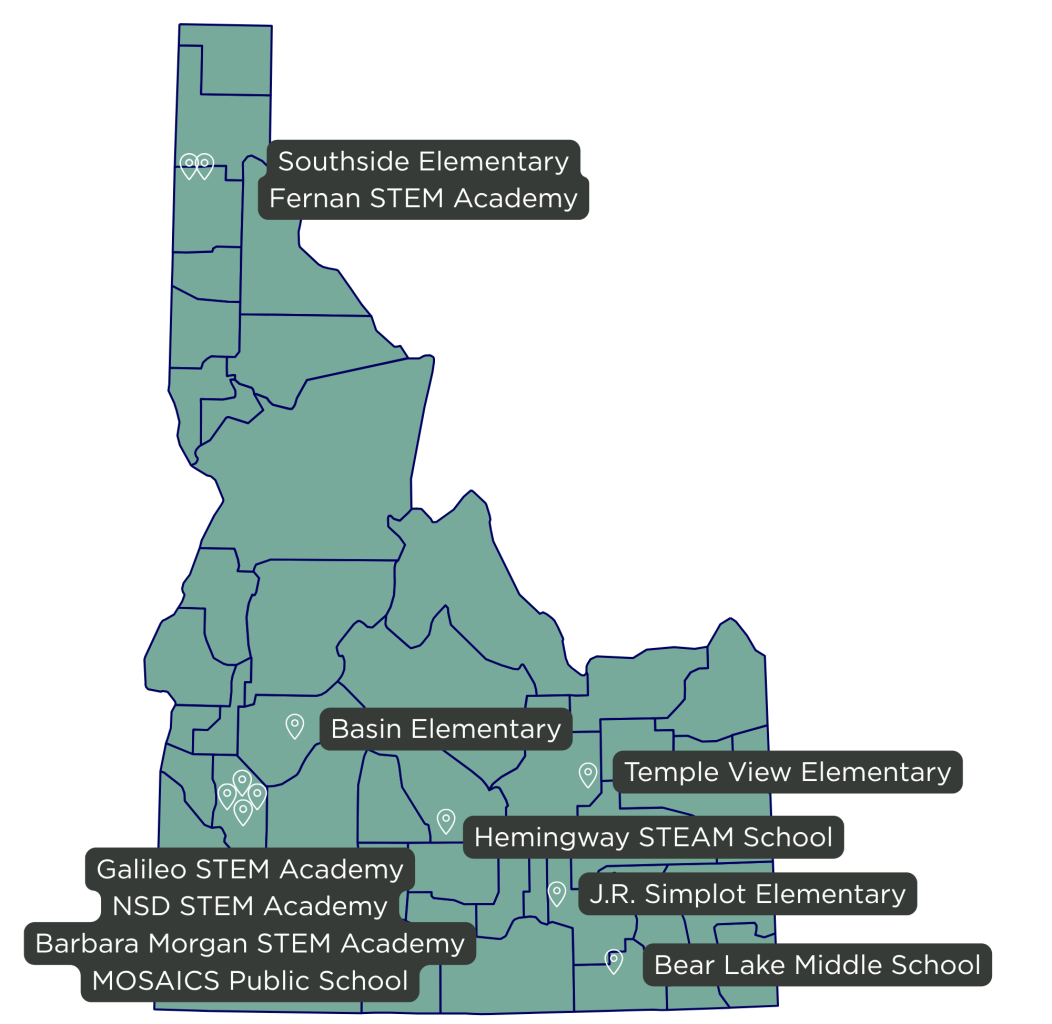
- Galileo STEM Academy – Eagle
- Barbara Morgan STEM Academy – Meridian
- Temple View Elementary School – Idaho Falls
- Southside Elementary – Cocolalla
- Basin Elementary – Idaho City
- J.R. Simplot Elementary – American Falls
- Hemingway Elementary STEAM School – Ketchum
- Fernan STEM Academy – Coeur d’Alene
- MOSAICS Public School – Caldwell
- Bear Lake Middle School – Montpelier
- Nampa School District (NSD) STEM Academy – Nampa